This verse will come one day; I know it will crawl to me
But not tonight; maybe it is not meant to be
Dissolved in whispers, or touched, or seen
Because all of that it has once been,
And lost, before time or light or memory...
This rhyme is not feeble, perhaps it's weary
Of dreams dared not dreamt, and eyes teary...
Friday, November 01, 2013
Un-rhyme

Thursday, September 19, 2013
Words that change my life

Source: Wikipedia
Power of words
As one who likes to think of himself as a writer, i am beginning to appreciate the fact that words don’t just give expression to our thoughts – they are often the source of our thoughts. We think and feel in words; if there is no word for it, then we can’t think or feel it. The breadth of our vocabulary shapes our attitudes and the depth in which we understand the words we use has a profound influence on way we live and how much meaning we are able to extract from life. I don’t think it is a coincidence that St John’s Gospel begins with: “In the beginning was the word, the word was with God, the word was god….” Much of human culture, civilisation and art is a product of and dedicated to the power and influence of words. One of my favorite descriptions of the power of words is by Maya Angelou, who says “Someday we’ll be able to measure the power of words. I think they are things. They get on the walls. They get in your wallpaper. They get in your rugs, in your upholstery, and your clothes, and finally into you.” Two words and one phrase stand out among the many words that have, and that continues to shape the trajectory and arc of my life.
Respice Finem
The phrase is “respice finem” and it is the motto of my school - Trinity College, Kandy. It means ‘look to the end”. It’s first recorded use is in a book called ‘Gesta Romanorum’ or ‘Deeds of the Romans’ of which nothing is known for certain about authorship or place of first publication. in its 103rd chapter is a verse that reads: ‘Quidquid agas, prudenter agas, et respice finem’ which means ‘Whatever you do, do cautiously, and look to the end’. In a way, it is about keeping our end goal in mind. Quite often those who have common objectives often have vastly contradictory views about the details of how to achieve them. For example, those holding opposing political views often have the best interest of the country at heart and want more or less the same end result. The more challenging and complex the common final objective is, the more it requires united and collective effort, and it becomes imperative for those with opposing views to ‘look to the end’ and acknowledge the common objective for them to work together to achieve it.
Trinity College Kandy was lished as a Christian Missionary school and it is possible that its founders were influenced more by the 36th verse in the 7th Chapter of the book of Ecclesiastes in the Holy Bible which says “Whatsoever thou takest in hand, remember the end, and thou shalt never do amiss”. Here, “the end” refers to death itself. Christianity’s strong emphasis on ‘salvation after death’ brought death and mortality to the forefront of Christian thought and philosophy. “Respice Finem” has been used as a “memento mori” in post classical European literature. I would have thought that reminding young schoolboys about death may sound grim and therefore an unlikely bit of advice; until Steve Jobs touched on the subject in his now famous commencement address at Stanford in 2006. In it he acknowledged that “...remembering that I'll be dead soon is the most important tool I've ever encountered to help me make the big choices in life. Because almost everything — all external expectations, all pride, all fear of embarrassment or failure - these things just fall away in the face of death, leaving only what is truly important. Remembering that you are going to die is the best way I know to avoid the trap of thinking you have something to lose. You are already naked. There is no reason not to follow your heart.”
Introspection
‘Introspection’ is one of the words that continue to influence me too. Children become self-aware at age one. by that age, I would have been able to recognise myself in a mirror as most toddlers that age do, but i did not encounter the word ‘introspection’ until i was much older - when I first read it in a poem that a friend had written for the School Officers’ Guild magazine in my senior year in school. It refers to “the examination or observation of one's own mental and emotional processes” - which means a lot more than mere ‘self awareness’ and requires the development of a mental capacity that is not necessarily innate but acquired. Ultimately, finding out that I could have an exciting, hilarious, probing, painful and honest conversation with myself was a pivotal moment in my life.
Being introspective doesn’t necessarily make me an introvert - i think. However, it draws focus inwards - away from the frustration and helplessness one feels at one’s inability to change the world and recreate it in our own image or one that pleases us - to how i can make a positive difference by the way live and and how i react to life’s challenges. For example, the introspective and examined life helps us contextualise big problems we face in our time such as pollution, climate change and corruption in terms of what we can and must do rather than worry about what everyone else should be doing. Mahatma Gandhi put it most eloquently when he said “...be the change that you wish to see in the world.” Introspection is as much about finding inner strength as it is about self-criticism, it is as much about humility as it is about self-awareness.
Love
The other word that has shaped my life is, of course, Love.
Eskimos have 30 words to describe snow, because exact descriptions of snow is a matter of life-and-death for them. Sanskrit (from which much of my mother tongue – Sinhala – is derived) has 96 words for love; ancient Persian has 80, Greek three, and English only one. Perhaps the result of having only one word to describe a vast universe of emotion and driving motivation has led to a poverty of awareness of what love means. On the other hand, maybe it is an acknowledgment of the fact that no matter how many words we have to describe it, we may never understand the full breadth and depth of what it means - or can mean to us. We already know that ‘love’ can mean so much more or less than what each of us understand it to be. We love things and people, seasons and places. It is sometimes a word we use to describe our desire to possess things, and yet quite often we love what we know we will never possess. We love some things only for a short time – like a cold drink after a long run on a hot summer day. Some things we love may last an entire lifetime.
It is an important word because invariably, we all devote our entire lives to searching for love; both the intimacy of pure unconditional love and the love and acknowledgement of broader society. Our assessment of self worth is often dependant on what others think of us and how they perceive us. Expensive cars and big houses only make us happy (or feel loved) as long as there are people in the world who judge and assess our relative worth by those possessions. How beautiful we feel, how comfortable we feel about being ourselves and how much we are ‘worth’ is often defined by the ‘love’ and acceptance of a society that oscilates between complete neglect and harsh judgement of what we do and possess.
What we love also transforms us more than anything else. Society may unfairly pigeonhole us based on our occupation or the company we keep, but we do conform to our surroundings to a great extent. If all the complexity of ‘living’ were to be narrowly simplified it would eventually get condensed to a mission in search of the things we love to do and the people we love to be with. Chances are, while pursuing what we love doing, we will find like-minded individuals, among whom inevitably be will be those who will heighten our understanding and appreciation of what love means and by that, add meaning to our lives.
Thursday, July 25, 2013
The Perpetual Conflict (2)

Image: thuppahi.wordpress.com
Fault-lines
Perhaps it is a tragic coincidence of our time; or maybe it was inevitable given the passage of generations, that we are marking the thirty year anniversary of Black July at the same time as we are approaching a centenary of such violence since the communal riots of 1915. With the escalation of religious intolerance and communal tension in recent months resembling the events of a century ago, we are faced with a peculiar dilemma: which anniversary shall we commemorate? The commemoration of historical events may be about preserving those memories for future generations to learn from, and for its darker chapters never to be repeated. But they must also compel us to be vigilant, and pay attention to the history that is in making today. In the space of four years since the war ended, communal intolerance is spreading its deadly tentacles through the cracks in our fractured national identity. Are we an inherently violent people who are incapable of peace? Of course not! But despite the significant influence of Buddhism on our civilisation, there is no evidence that we are inherently peaceful either. Ours is not unique among the ancient civilisations of the world. We adapt to our times and react to our environment like any other and we have always had choices to make about how we do so.
Before European colonisation, our society was organised hierarchically along social classes and castes. It may have been a strange twist of fate that the civilisations of the East and the colonial project of the West had to collide on our shores in the renaissance years, but in many aspects, it was only a matter of time. When that did happen, it was inevitable that our ancient social order which organised society in a stable – but broadly oppressive – caste based social structure would face direct competition from an alternative model for social organisation based – at least in principle - on the egalitarian aspirations that the reformation has unleashed in Europe.
A successful empire needed an efficient bureaucracy. Even though we tend to think of the colonial project in Sri Lanka as a time of foreign occupation, in truth it was run mostly by Sri Lankans who carried out the will of the British Crown. The colonial government and missionary movements were expanding an education system that the British had pioneered and perfected – aimed at producing the cogs and wheels of the machinery of empire. As a result, the late 19th century saw the emergence of a distinct class of educated Sri Lankan professionals and bureaucrats who symbolised avenues for upward social mobility that had never before existed in the island. The Ceylon Civil Service and other professions saw an influx of a new band of local elites. Aspirations of social mobility would no longer be restricted to those with a birth-right.
Education in colonial Ceylon; was designed to produce an efficient bureaucracy and disciplined professionals. It was not designed to produce leaders who could inspire the masses which may challenge the empire. The products of most elite missionary schools were accused of being ‘brown sahibs’ who thought and spoke like their imperial masters and far removed from their own countrymen and women who constituted the masses. Such accusations were not unfounded; nor were they broadly unfair. Students who spoke in a native tongue was often punished for it – and such punishment was accepted by parents who was adamant that their children must learn English – if they couldn’t wholly shed their own identity and learn to be English. This philosophy was not without its detractors and peculiarly enough, its dissenters were mostly found among the foreign educators. A. G. Fraser who became Principal of Trinity College, Kandy at the turn of the twentieth century was one of those few dissenting voices. Early into his tenure at Trinity, he wrote that:
“A thorough knowledge of the mother tongue is indispensable to the culture of real thinking power. More, a college fails if it is not producing true citizens; and men who are isolated from the masses of their own people by ignorance of their language and thought can never fulfil the part of educated citizens or be true leaders of their race”
~ Fraser of Trinity and Achimota by W. E. F Ward, Ghana University Press, 1965 (p 49)
The views articulated by Fraser and others like him were radical then, and they remain at the fringes even today. They found little traction even in the institutions they built – which had to cater to the aspiring middle class parents who send their children to them. An ‘English education’ in an elite school still offer the safest – if not the only – avenue of entry to the middle class of Sri Lanka.
The Ceylon Legislative Council which was established in 1833 was expanded in 1889 to accommodate more ‘unofficial local members’. The idea that the colonial government had even symbolic local representation even in those early years would be obscured by the fact that those local members had little to do (and even less in common) with the ‘local people’ they were meant to represent. More significantly however, those local representatives to the legislative council were chosen based on their ethnic and religious identity – giving birth to the divergent ‘communal’ ideas about what it meant to be Sri Lankan that would eventually penetrate the public conscience – if not the political discourse in our country that persist to this day. The currents of democratic politics, as they flowed through the land in subsequent decades, would entrench those communal divisions in a society that was also remained stratified by caste and class. Those divisions would eventually become the fault lines along which subsequent conflicts would erupt for the next century and more.
Neither the colonial government nor the local intelligentsia that emerged from the education system would ever actively challenge – let alone try to dismantle or undermine – the hierarchical social order of the old world that persisted. Instead, they would perpetuate it with their own elitist ambitions and by using their privileged position in society as an entitlement to high status. They would use their education to gain proximity to power centres of society rather than to serve the underprivileged masses.
The democracy we enjoy today was prematurely inherited – long before it was demanded or earned. Therefore our political values have remained feudal, allowing the existing social divisions to get further entrenched. That is why political parties in independent Sri Lanka have often been tempted to carve out constituencies along the same narrow communal lines; which the unofficial representatives to the Legislative Council had been chosen from long before, by their colonial masters. Nothing really changed except that the old order that stratified our society by notions of caste and class had been democratised. A society that had in turn been fractured along communal divisions allowed the long subjugated majority to rise up on its own. They would do so in the form of a “pancha maha balawegaya”, to impose their own cultural and religious identity on the state. They would redefine what it means to be Sri Lankan in their own image.
As Fraser had feared half a century before Sri Lanka gained her independence; very few of the English speaking, cosmopolitan elite that inherited political power in the newly independent country were able to understand – let alone empathise with – the masses that they ruled. They represented, and rose to power, on the back of a powerful middle class that dominated industry, land and enterprise. Ironically, those elites who led the nationalist movements in newly independent Ceylon, could hardly speak the language of their constituents. The republic that subsequent generations inherited had been shaped irreversibly by the communal divisions and unbridled political forces that they had unleashed for petty political gains. Even today, political parties are forced to balance those same communal interests as well as class or caste interests in the constituency; both to assume power and to retain it amidst the many conflicts that would inevitably arise along those historical fault lines.
Starting with the land reforms of the mid 1950s, the tables would turn on the dominance of the middle class. Details of the subsequent social transformation may be analysed elsewhere, but today the English speaking middle class is too weak and not found in sufficient geographic concentration outside Colombo to be politically relevant. Outside of the sports and business pages of the English media, only the local blogosphere and Internet forums bear any evidence of their ghostly existence. The leaders they vote for do not get elected and the thoughts and ideas they express – mostly in English – rarely penetrates the public discourse (and its irony is not lost on me).
The tragedy of the middle class elite in Sri Lanka is not merely that they are politically or socially irrelevant. On the contrary, middle class Sri Lankans of all communities distinguishable not so much by their communal identity but rather by their shared liberal values and progressive political outlook. The small and shrinking numbers of Tamils, Sinhalese, Muslims and Burghers of middle Sri Lanka who listen to the same kind of music, watch the same movies, read similar books and discuss very similar topics have more to do with each other than with rural cousins from their own ethnic or religious communities. Yet their ‘education’ separates them from the rest of their countrymen and women. The promises they make to never allow events such as Black July to happen again – though honest and well intentioned - are inherently unreliable; because they never understood the communal tensions and class struggles of the masses that have torn the social fabric of our country for over a century. They still remain ignorant of the dangers that A.G. Fraser had warned them about a century earlier.
The Perpetual Conflict (1)

The dark clouds of history
When I look back, I do not see the black smoke rising, or the cries of hapless countrymen, women and innocent children – victims turning into victimisers, turning into victims – caught in a cycle of violence that has persisted beyond living memory. Whatever I have seen of that time and moment of our flawed history; I have seen through the eyes of others. The picture has at times blurred with their tears and at times its intensity has been sharpened by the raw emotions that still engulf those who bear them; who are still griped by what they experienced in the deepest and rarely visited corners of their souls. But I do feel the heat of those fires that were lit long ago when I was barely two years old. No longer a toddler but not yet a child, I had been born into the violence that erupted then and accompanied me well into my adulthood like a dark shadow that still tug me at my feet wherever I go. I do not know how the events of that July should be remembered, because the embers of those fires still linger in the world we inhabit.
Must we reassemble those columns of thick black smoke and smell of burning rubber and burning flesh from the collective memory of a forgetful nation? The rich and eventful lives of even the most unforgettable people are eventually summed up in a short epitaph on a gravestone – if that. And so it is that the collective suffering, shame, pain and tragedy of the events of July 1983 has been etched in the gravestone of history merely as ‘Black July’; filing away the abridged events of preceding years and months that led up to the riots in a colour-coded folder in our collective memory. The mention of “Black July” evokes images of the sooty columns of smoke that would have risen up from the burning buildings, but the term also robs our imagination of the broad spectrum of colours that were lost in those fires. It says nothing of the vibrant lives that were consumed in that violence and the subsequent war that escalated. After thirty years, can we now hope to resurrect those vivid memories? Do we seek out the victims who have since lost their conception of ‘home’; picking up the pieces of their shattered lives in different parts of the world, trapped in places that cannot contain their memories and yet unable to return to where their journey began? Perhaps we should go in search of those dark faces of men who perpetrated the most heinous crimes in our recent history. We owe it to ourselves and all those who have paid the price for their mindless acts - to ask them and their loved ones whether they are proud of what they did back in July of 1983. Will their voices betray any guilt or shame? Are they haunted by the ghosts of their victims or troubled by their inner conscience?
But with each attempt we make at reconstructing those memories, we move away from their reality towards a constructed narrative and a new conception of how those events should be remembered. Because even the most intimate memories are never pure or uncorrupted – they are born tainted by the prejudices and affections of those who bear them. All our memories are continually reshaped for as long as we hold them – carved by emotion, chipped away by our biases and infused with other memories that cohabits the neural spaces they occupy. The actual history of the past three decades can never be fully reconstructed with fractured accounts of what happened in that fateful month in 1983. We must realise that even in their totality; all those accounts may never paint an accurate picture of those long bygone events. The narrative will inevitably evolve with each subsequent retelling, and if we are lucky, it will be retold more meaningfully and in ways that are relevant to their time and place.
Three decades on, as we seek to reconstruct the narrative in a way that is relevant to our time, perhaps we need to cast our nets in deeper waters and look beyond the events of 1983. Even though the smoke towers have dissipated long since, the trail of violence perpetrated by Sri Lankans on Sri Lankans extends for at least a century; well beyond ruins of July 1983. It is imperative that we recognise that the embers of that violence continue to burn today, undermining the very foundation of our society, four years after the end of a brutal civil war. Memories of the different cycles of violence have transformed and grown feeble with time, and resurrecting their fragile recollections from a century ago is going to be a precariously difficult task. Especially on emotionally charged days and anniversaries like these, we must be cautious not to assume that the recollection of historic milestones and anniversaries is the same as learning from our history’s long and painful passage. Breaking this cursed cycle of violence that we have been born into, requires more patient analysis and introspection than the frenzy of penning a moving memorial to one of many watershed moments in history usually affords.
Having been born in the early 80s, my generation has endured a series of significantly violent events starting with the riots of July 83’ and the insurrection of 1989. The war that raged in the 80s would escalate through our teenage years in the mid 90s and a great number of us would eventually be enlisted in the military or recruited to the LTTE in subsequent years. The remaining years of much of those recruits would be left to decay in the corrosive concoction of violent memories they bear. Yet for a majority of us – including myself, and I suspect, a disproportionate number of those who read this – are likely to belong to a demographic that could afford to distance ourselves from that physical mayhem, though not from the images of war. Hence, even though our entire lives have been engulfed and defined to a large extent by the events of 1983 and their consequences, we do not have any real experience of the violence that we were born into and grew up with. We must strive harder to broaden our understanding of how war and violence has shaped our thinking and expectations. The physical violence that ended in 2009 has left mental scars that will persist in our generation and influence the decisions that will shape our country in years to come.
But our generation is not unique by any stretch of the imagination. Preceding generations – for nearly a century – have all grown up in a vortex of violence that we have so far been unable to escape since the anti-Muslim riots in 1915. Every generation since, have inflicted and endured violence and conflict to the extent that we no longer have any living memory of peace. Having endured World War in the 1930s, a newly independent Sri Lanka was unable to resist the temptation of asserting the dominance of its majority on language policy in the mid 1950s, leading to the anti-Tamil violence in 1958. The generation that followed in the 1970s fractured both the North and South of the country. The northern conflict would endure for three decades while the south that ignited in the early seventies would flare up again in the late 80s. In the mid 1990s, war would resume with greater intensity, conditioning us to accept the loss of thousands of lives within the span of hours in single battles; not as some of the greatest tragedies in the history of our country, but as facts of daily life.
Indeed, at no point in the history of our tiny island have we known what a peaceful and equitable state looks like. Therefore we still do not know what to expect of one. It should have been clear to us even as we celebrated the end of war in 2009; that our collective imagination was unable to capture the true essence of peace. Because, for over two millennia, we have only experienced the subjugation of monarchs, the exploitation of empires, the coercive power of an insecure majority and the domination of a powerful presidential state that still unleashes violence to maintain its power over unarmed citizens as well as on the rule of law.
It is ironic that we take so much pride in being heirs to an ancient and rich history. Perhaps it is that rose-tinted perception of history that inspired us to celebrate in May 2009 – filled with optimism about the prospects of peace at the end of a thirty year war. But, not everyone who set off firecrackers in the streets on that bright and unforgettable day would have really understood the prematurity of their celebrations. As we look around today, it is quite apparent that the violence has not ended with the events of May 2009 – just as much as they did not begin in July 1983.
Given the pattern of events that have persisted for over a century, it is not altogether surprising that four years since war’s end, we have allowed ourselves to loop back in time to an eerily familiar place. Where we are now is not too dissimilar from the events and collective mindset that led to the Sinhala-Muslim communal violence almost exactly a century ago. The details of those events need to be explored separately, but every generation since then have been offered unique opportunities on separate occasions, to recognise our shared identity. Each generation was invited to the high table of history, to conceive of a state (and a state of mind) that is broad enough to contain our rich diversity. But today, we stand among the ruins of our past, where each of those subsequent generations failed. May 2009 was our moment. It still is. Are we destined to falter like those before us who never understood their place in history, or will we be the generation that will be remembered for constructing a new history, and a successful alternative path to a more equitable future? But even as we reflect on that moment, the bountiful reasons we had to celebrate at the conclusion of war in 2009 are dissolving one by one, eroding away what little remains of any faith we may have had in our ability to escape this multi generational cycle of violence.
The responsibilities and burdens of history rest on our shoulders now; notwithstanding that ours is a generation that is at a greater disadvantage than any before us. If we are to succeed, we must first have the courage to reject the violence and intolerance that has conditioned us over a lifetime. We cannot afford to take the unprecedented bloodshed and rule of violence which engulfed the North and South, for granted as facts of life. The thirty years that has passed since July of 1983, is significant not only for the victims of those despicable acts of violence, but for our generation that was born into it, grew up with it and is not called to on to be the ones to prevent our country from relapsing back into the ever more familiar cycle of violence. The history of violence in Sri Lanka runs much deeper in our collective memory than we are able to recall as individuals. That is why we must now reconstruct our history not merely as Sinhalese, Buddhists, or both, but together - collectively in a space that is large and hospitable enough to accommodate all communities that make up Sri Lanka.
So far, we have been learning the wrong lessons from history. Rather than learning how to avoid making the same mistakes we have made in the past, we seem to have instead learned how to use history to inflame and repeat those mistakes more competently. Perhaps if we can understand our place in history better than previous generations were able to, we may yet hope to break the cycle that made events like those of July 1983 possible. That is not going to be easy – and the odds of history are stacked heavily against us. However, if we can understand this moment in our history, and succeed in disentangling the truth about our past and present from the myths and falsehoods that have taken root in our belief system; we will have reason to be optimistic.
Thursday, June 20, 2013
Solstice
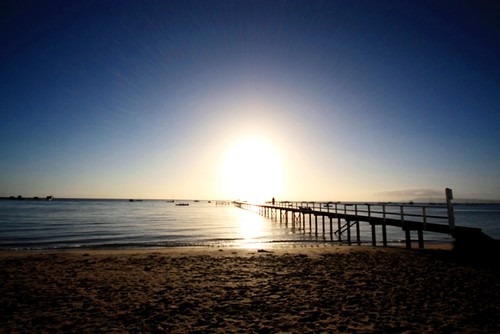
When senses have all retreated
Into the frosty shadows of starlight
And the Earth is submerged in darkness
And the Earth is submerged in darkness
From ocean depth to mountain height
Only the faithful hearts keep beating
Enduring in faith, and hope’s delight
Waiting for the sun to reclaim its place
And rescue dawn from the depths of night
~
Subscribe to:
Posts (Atom)